
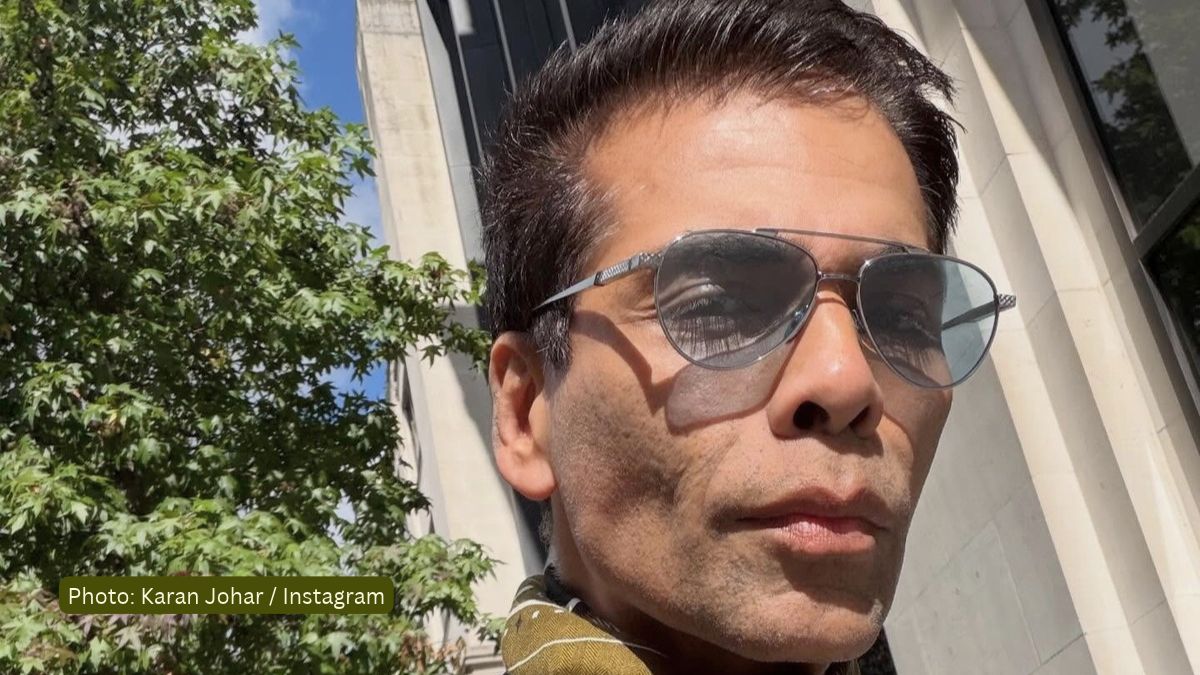

Few people in Hindi cinema can start an argument by simply turning up on a sofa. Karan Johar can. After 22 years, 161 episodes and a reputation that has followed him into every boardroom, he has announced the end of ‘Koffee with Karan’, with the ninth and final season due to premiere on JioHotstar from this week. It is a natural moment to ask the question that has trailed him for most of that time. Is he a drag on the industry that made him famous, or has he become the person everyone blames for problems far larger than one man?
Where the criticism comes from
The case against Johar rests mostly on one word, nepotism, and it is not a case invented by social media. He is the son of producer Yash Johar and the nephew of Yash Chopra, and he took charge of Dharma Productions after his father’s death in 2004. He has built a career launching the children of film families, which means the industry’s best-known debate about access has long had his name attached to it.
The criticism hardened after Sushant Singh Rajput’s death in 2020, when casting practices at Dharma and elsewhere came under public scrutiny. Johar defended his record by pointing to the debut directors and outside talent his company had introduced.
Individual stories feed the picture too. Ayushmann Khurrana wrote in his book that he was once told by Dharma that it only works with stars and so could not work with him, an episode that resurfaced in 2021 when Kartik Aaryan was dropped from ‘Dostana 2’. Anecdotes are not evidence of a pattern on their own, but they have been repeated often enough to harden into one in the public mind.
Then there is the tone. At an IIFA ceremony, Johar, Saif Ali Khan and Varun Dhawan chanted ‘nepotism rocks’ in a routine aimed at Kangana Ranaut, who had earlier called Johar the flag-bearer of nepotism on his own chat show. Johar later told NDTV the joke was his idea, that it went too far and that he regretted it. Admitting it is to his credit. The fact that it happened is the reason critics still bring it up.
What he says back, and what he has actually made
In August 2025 Johar published a long note on Instagram attacking clickbait culture and chat shows that invite guests with nothing to lose to say damaging things about industry insiders. He named no one. A Gulf News commentary responded by asking who decides who counts as a non-entity in Bollywood, and pointed out the irony of a figure widely seen as a symbol of nepotism drawing that line. It is a fair challenge, and he has not answered it directly.
His record as a producer, however, complicates the story. ‘Raazi’ and ‘Shershaah’ both won Filmfare awards for best film, neither of them a star-kid vehicle. His own ‘Rocky Aur Rani Kii Prem Kahaani’ won a National Film Award. ‘Brahmastra Part One Shiva’ won the inaugural National Film Award for best AVGC film. ‘Homebound’, which he produced, was India’s official entry for the 2026 Academy Awards and made the shortlist before leaving the race. For a company supposedly built on safe bets for famous families, that is an unusually varied list.
The money tells a similar story. In 2024 Adar Poonawalla’s Serene Productions agreed to buy a 50 per cent stake in Dharma for around Rs 1,000 crore, valuing the company at roughly Rs 2,000 crore. Investors do not usually write cheques of that size to a business they believe is poisoning its own market.
The harder question about new talent
Where Johar is most exposed is not what he has said but what some of his launches have delivered. One critic, writing about Ibrahim Ali Khan’s debut in ‘Nadaaniyan’ on Netflix in March 2025, called it a dreadful film and said Johar must take much of the blame as producer for failing to spot obvious mistakes. The same piece listed earlier Dharma launches that drew similar complaints. ‘Chand Mera Dil’, with Ananya Panday and Lakshya, opened to an underwhelming weekend of about Rs 11 crore and finished at around Rs 27 crore in India according to Pinkvilla.
A run of weak debuts does not make a person toxic, and every studio has them. It does, however, sharpen the argument made by his critics. If the system gives some newcomers repeated chances and others very few, then the cost is paid by the people who never got the call.
Separating allegation from fact
It is worth being careful here, because the loudest claims about Johar are also the least supported. In March 2023 Kangana Ranaut alleged that he had banned Priyanka Chopra from Bollywood over her friendship with Shah Rukh Khan and had harassed her until she left India. Chopra had said she moved to the United States because she was pushed into a corner and tired of the politics. Ranaut offered no evidence and no response from Johar was reported. That is a serious allegation, and in the absence of anything to support it, it remains only an allegation.
So is Karan Johar toxic?
The evidence does not support a one-word verdict. What it supports is more uncomfortable and more useful. Johar is the best-known beneficiary of an industry that has always rewarded family names, and he has used his position to do both things at once, to open doors for the well-connected and to back some of the most acclaimed Hindi films of the past decade. He has apologised for one cruel joke and has not meaningfully answered the broader charge. Those two facts can live together.
What he cannot control is symbolism. For many outsiders, he is the face of a closed door, whether or not he personally closed it. And as he steps back from the show that made that image, saying he wants to spend the next decade directing more films, the real test is simple. The films will have to speak louder than the sofa ever did.
Final take
Karan Johar is the most visible symbol of nepotism in Hindi cinema, a reputation sharpened by the IIFA joke he later regretted, anecdotes about outsiders being turned away and a string of underperforming star-kid launches. His record as a producer includes ‘Raazi’, ‘Shershaah’, ‘Rocky Aur Rani Kii Prem Kahaani’ and ‘Homebound’, and Dharma attracted a Rs 1,000 crore investment for a 50 per cent stake in 2024. The most serious claims made against him, such as the allegation about Priyanka Chopra, are unproven. A fair reading is that he embodies a real structural problem without being its sole cause.