
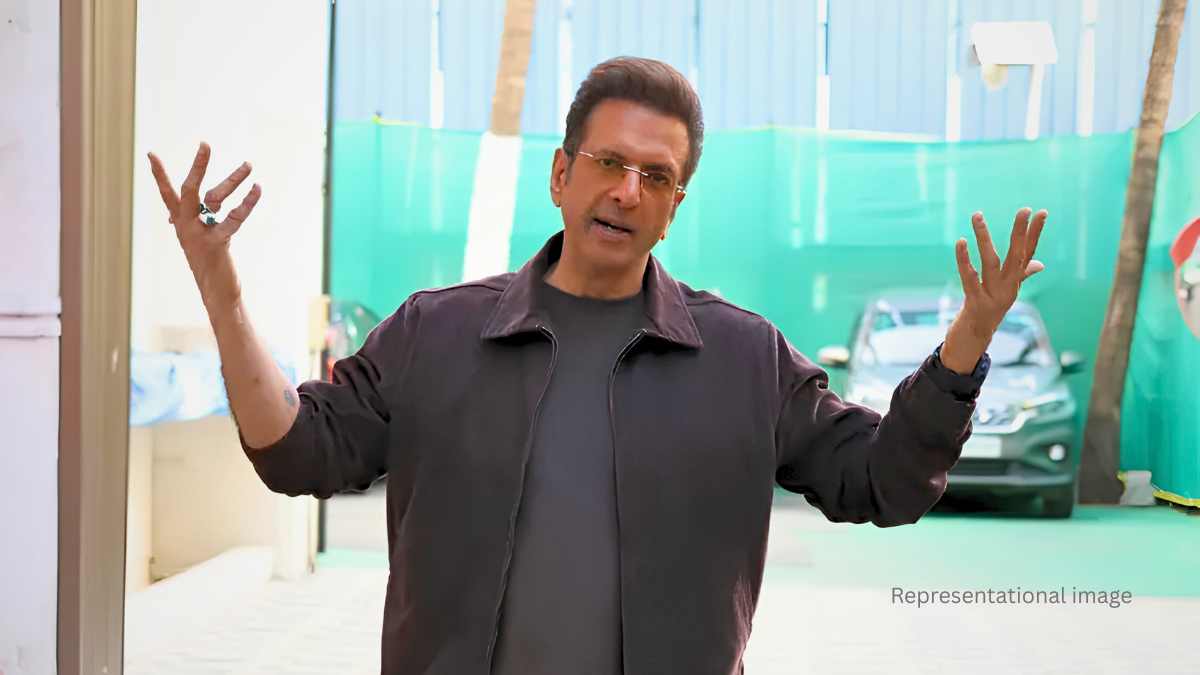

Jaaved Jaaferi has spent four decades being universally acknowledged as one of the most gifted performers Bollywood has ever produced and just as universally overlooked when the industry’s inner circle was handing out leading man status.
In a recent candid interview with The Times of India, the actor finally addressed the question that has quietly followed his career since the 1990s: why did extraordinary talent, genuine popularity and a hit debut not add up to an A-list position? His answer, delivered with characteristic honesty and without particular bitterness, pointed squarely at two things. Packaging and PR.
“I think it depends on how you’re packaged,” Jaaferi said. “There’s also PR involved because the industry has its own web. There are times when there’s a negative thing about you out there, so you need a reality check or a positive thing about you being put out.”
He then added, with the kind of frank self-awareness that Bollywood rarely rewards but frequently claims to admire: “I failed to do that, in some ways. I was also not a part of any group.”
It is a remarkable admission, not because it reveals anything particularly shocking about how Bollywood operates, but because so few people who have operated within the system say it out loud and with such clarity. The industry has its own web. PR shapes perception. Groups matter. Packaging is often as important as performance.
Jaaferi did not play those games and he is honest enough to connect that choice directly to the ceiling his career hit during what should have been his peak years.
He used Salman Khan’s early trajectory as a telling illustration of how the system works when momentum aligns with opportunity. “He came in with ‘Biwi Ho Toh Aisi’ and people wrote him off. Then ‘Maine Pyar Kiya’ happened, and then everybody was running after him. It’s the same Salman Khan. It’s not like he was doing something different than what he was doing in ‘Biwi Ho Toh Aisi’. But it’s just the success.” One blockbuster, he argued, rewrites every prior judgement the industry has made about a performer. “From that perspective, I never got that big hit,” he said in the ToI interview.
The additional complication in Jaaferi’s case was the manner of his introduction to audiences. Launched as a villain in Subhash Ghai’s ‘Meri Jung’ in 1985, produced by NN Sippy, two of the most powerful names in the industry at the time, he found that the very prestige of that launch worked against him in the long run.
He acknowledged that neither the industry nor he himself moved decisively to disrupt that perception. “I didn’t pitch myself either,” he said. “But I don’t think too much about it, honestly.”
That last line is doing considerable work. The equanimity is genuine, one suspects, but it is also the equanimity of a man who understands, looking back, that the variables were more numerous and more structural than talent alone.
His song ‘Bol Baby Bol’ was a cultural phenomenon. His dancing was in a category of its own. His comic timing and dramatic range both demonstrated a performer of rare depth. What he lacked, by his own account, was the managed narrative, the strategic alliances and the sustained media presence that convert popular recognition into industry currency.
This distinction, between being liked and being positioned, is one that Bollywood has always understood privately and rarely discussed publicly. In the digital age it has become more measurable than ever.
Platforms, algorithms and media monitoring tools now track precisely how a public figure’s presence accumulates and compounds across channels over time. Resources like the PR Visibility Score allow industry professionals to assess this kind of presence in a structured, data-referenced way, making visible the gap between a performer’s actual cultural footprint and the industry perception that follows them around. In Jaaferi’s case, one suspects the gap was always considerable.
Jaaved Jaaferi, appearing in ‘Dhamaal 4’ alongside Ajay Devgn, Riteish Deshmukh and Arshad Warsi, is in work, respected and very much part of the conversation. Whether the conversation is arriving four decades too late is a question the industry might find uncomfortable to sit with.
What his recent interview makes clear is that Bollywood’s ecosystem has always rewarded those who understood that visibility is not a vanity exercise. It is a career infrastructure. Jaaved Jaaferi knew the game. He simply chose not to play it. The bill, by his own account, eventually arrived.